
How to Calculate Bricks, Sand, Cement and Stones for a 100m² House
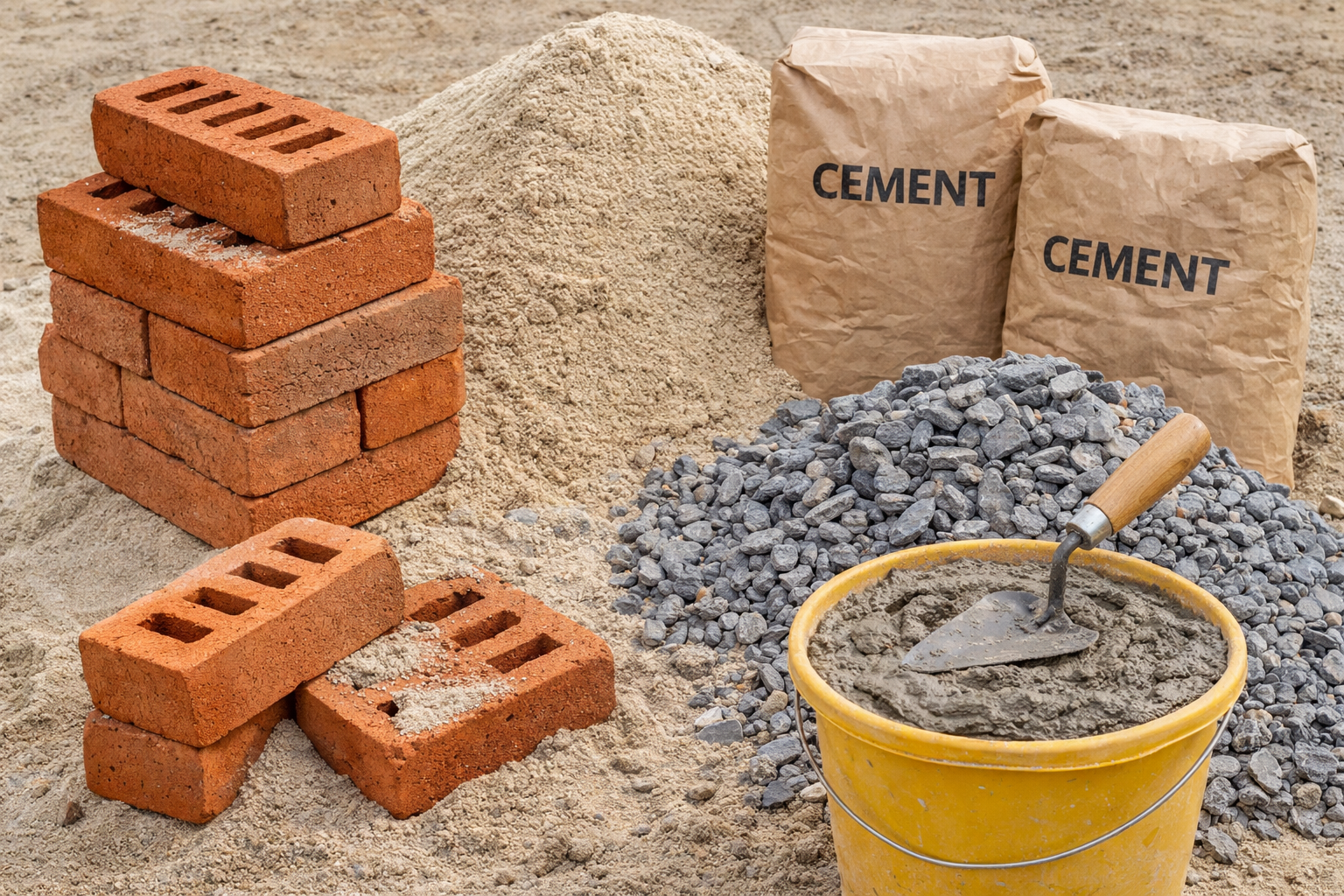
Before starting construction, one of the most important steps is estimating the building materials required. Knowing how many bricks, bags of cement, sand, and stones are needed for a 100m² house helps you control costs, avoid shortages, and plan your budget properly. This guide explains the basic method used by builders and quantity surveyors to estimate materials for a typical residential house.
Understanding the Size of a 100m² House
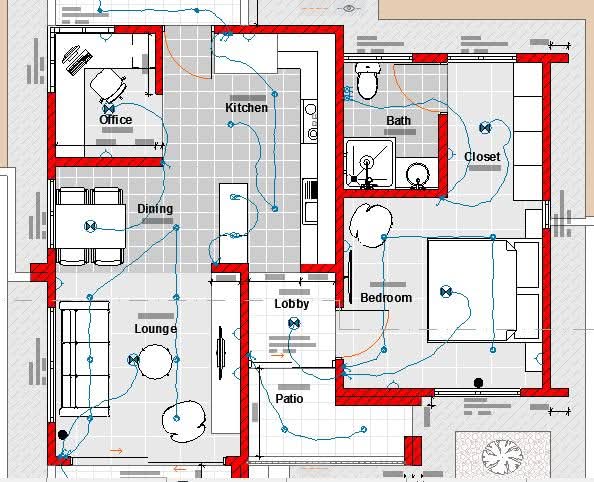
A 100 square meter house is a common size for a modern two-bedroom home. The size includes all internal spaces such as bedrooms, bathrooms, kitchen, and living areas. In most cases, a house of this size will measure approximately 10 meters by 10 meters if designed in a square shape.
However, the shape of the house may vary depending on the architectural design. Some houses are rectangular, L-shaped, or designed with additional verandas and garages. These variations slightly affect the quantity of materials required.
For estimation purposes, builders normally calculate the wall perimeter and multiply it by the wall height to determine the total wall area.
Step 1: Calculating the Number of Bricks
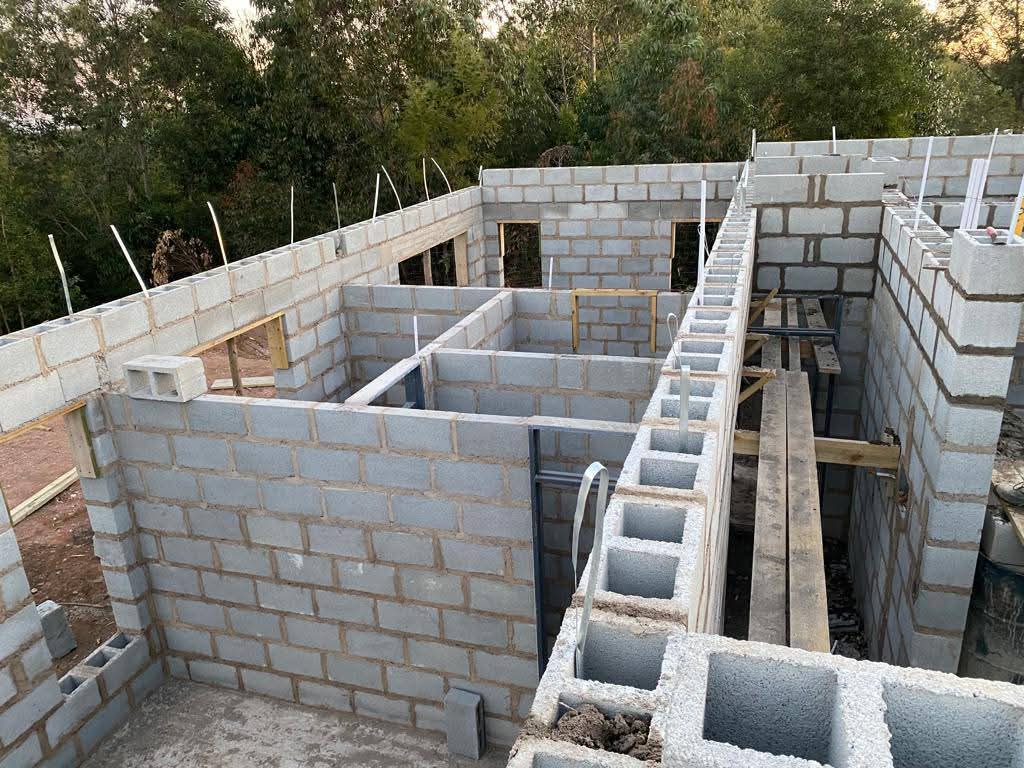
Bricks are the primary building material used for walls. The total number of bricks depends on wall length, wall height, and brick size.
A standard brick wall usually requires approximately 50 bricks per square meter.
To calculate the wall area:
- Assume house perimeter: 40 meters
- Wall height: 2.8 meters
Wall area = Perimeter × Height
Wall area = 40 × 2.8 = 112m²
If 1m² requires 50 bricks:
112 × 50 = 5,600 bricks
After adding 10% for breakage and wastage, the total becomes approximately:
6,200 bricks
Step 2: Calculating Cement for Bricklaying
Cement is used to make mortar that binds bricks together. The amount required depends on the thickness of mortar joints and brick size.
For bricklaying, builders commonly use a mortar mix ratio of:
- 1 part cement
- 5 parts sand
For approximately 1,000 bricks, about 6 to 7 bags of cement are typically required.
For 6,200 bricks:
6,200 ÷ 1,000 × 6 bags ≈ 37 bags of cement
It is recommended to round up for safety, so a builder may purchase around:
40 bags of cement for bricklaying
Step 3: Calculating Sand Required
Sand is mixed with cement to create mortar. The amount needed depends on the mortar ratio and number of bricks used.
For every 1,000 bricks laid, approximately 0.5 cubic meters of sand is needed.
For 6,200 bricks:
6,200 ÷ 1,000 × 0.5 = 3.1 cubic meters of sand
Builders normally round this to around:
3.5 to 4 cubic meters of sand
This allows extra material for plastering and minor adjustments during construction.
Step 4: Calculating Stones for the Foundation
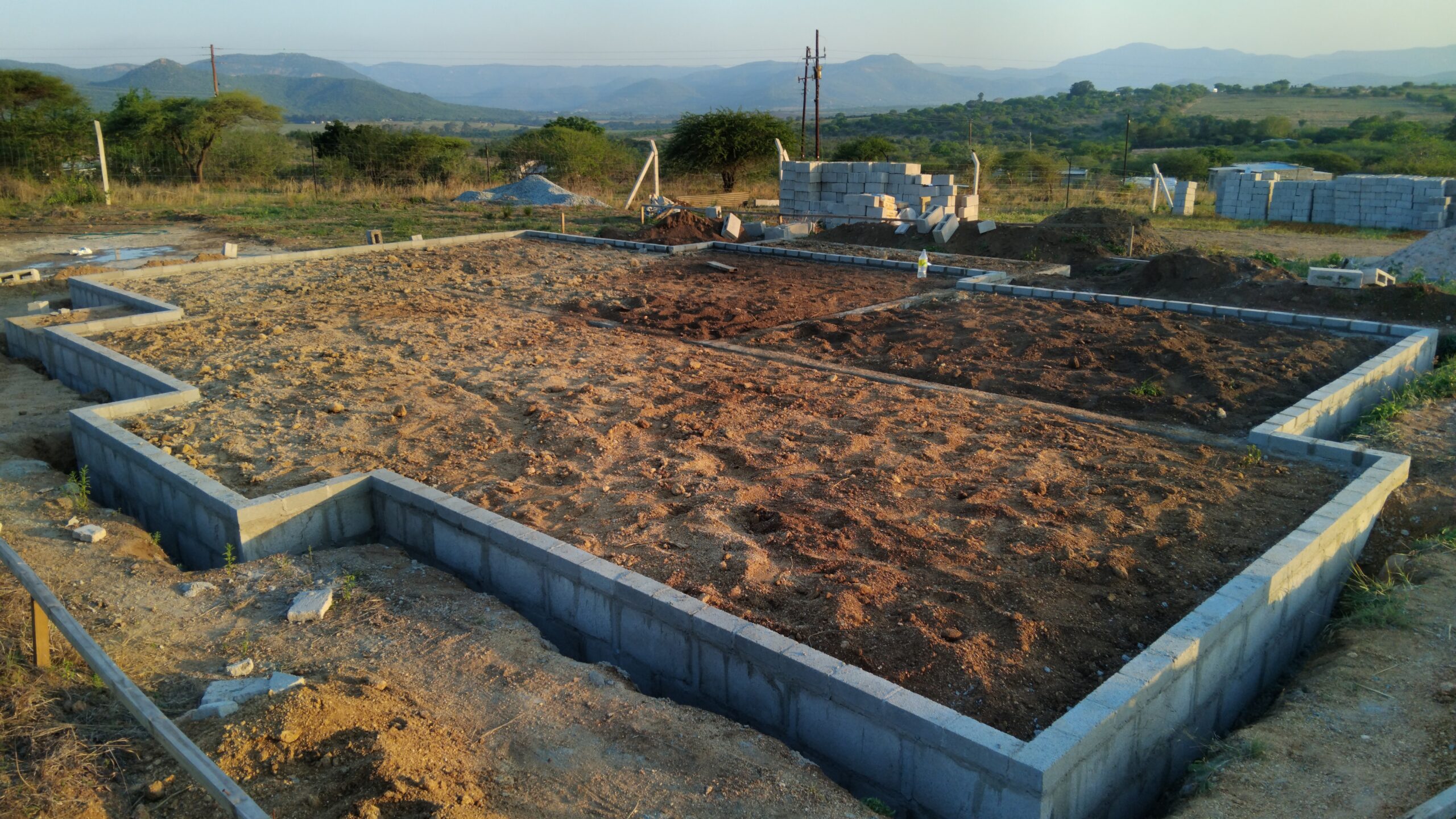
Stones are mainly used in the foundation of a house. A strong foundation supports the structure and distributes the weight evenly across the soil.
For a 100m² house, the foundation trench may be approximately:
- 40 meters perimeter
- 600 mm wide
- 300 mm deep
Volume of stone required can be estimated as:
Length × Width × Depth
40 × 0.6 × 0.3 = 7.2 cubic meters
To allow for compaction and irregular stone shapes, builders usually order around:
8 to 10 cubic meters of stones
Additional Materials to Consider
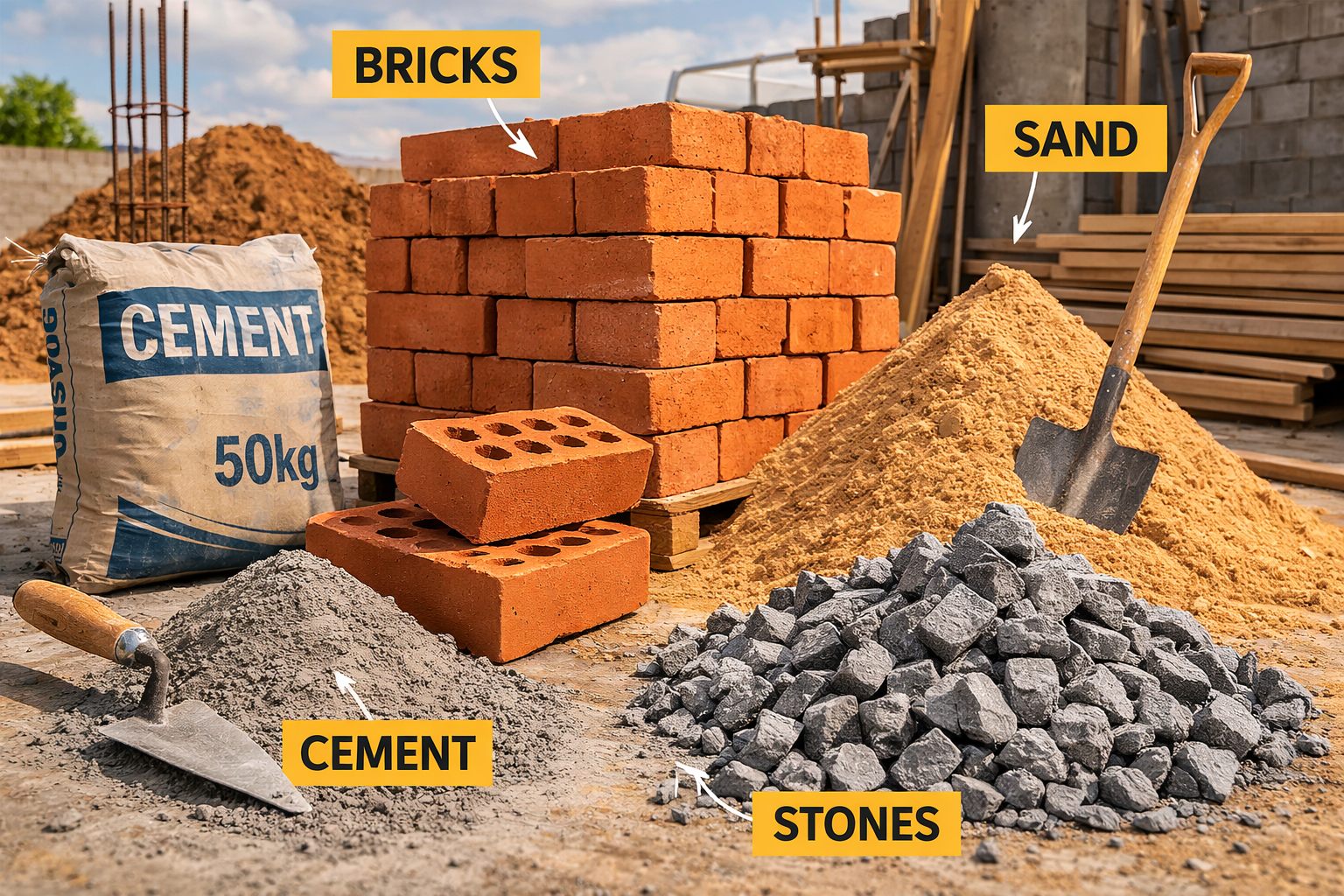
Besides bricks, sand, cement, and stones, several other materials are required when building a house.
- Steel reinforcement bars
- Concrete for foundations and slabs
- Roofing sheets or tiles
- Timber for roof structure
- Doors and windows
- Electrical wiring
- Plumbing pipes
These materials should also be included in your full construction budget to avoid unexpected costs during the project.
Tips to Reduce Material Waste
Material waste can significantly increase construction costs. The following tips can help reduce unnecessary losses:
- Buy quality bricks that are less likely to break
- Store cement in a dry place
- Measure mortar carefully when mixing
- Hire experienced bricklayers
- Plan material deliveries properly
Proper planning ensures that your construction project stays within budget and progresses smoothly.
Final Material Estimate Summary
- Bricks: approximately 6,200 bricks
- Cement for bricklaying: approximately 40 bags
- Sand: approximately 3.5 – 4 cubic meters
- Foundation stones: approximately 8 – 10 cubic meters
These estimates are general guidelines and may vary depending on house design, wall thickness, and construction methods.
Conclusion
Calculating building materials before starting construction is essential for managing your building budget effectively. For a typical 100m² house, estimating bricks, cement, sand, and stones allows homeowners to prepare financially and avoid interruptions during construction.
While these calculations provide a good starting point, it is always recommended to consult a professional architect, engineer, or quantity surveyor to prepare accurate building estimates for your specific house design.
With proper planning, the right materials, and skilled builders, your construction project can proceed smoothly from foundation to completion.